Speaking Two Languages May Help Protect the Aging Brain
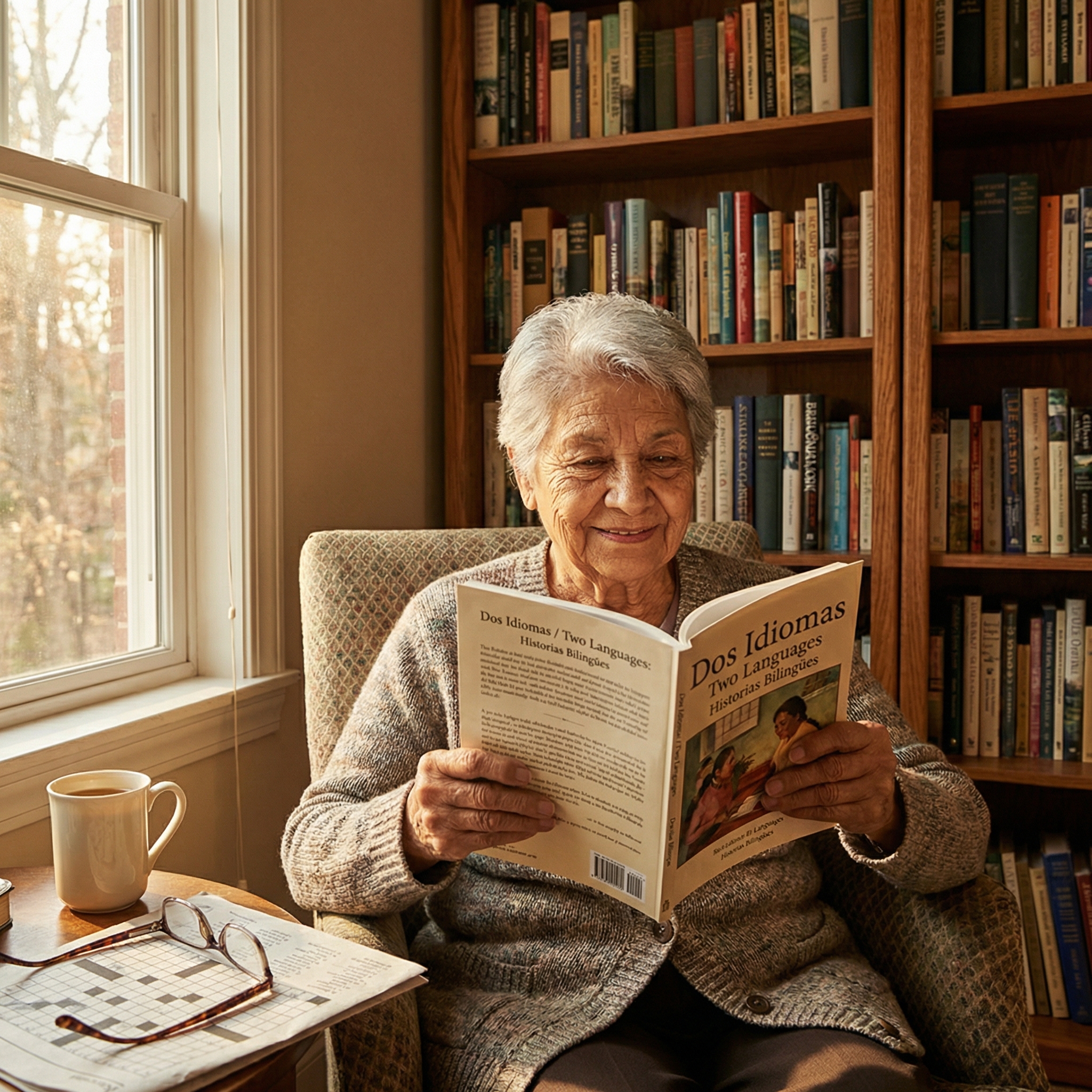
Most people assume "one language is enough" once parents get older. But the brain might actually benefit from switching between languages, even later in life.
🧠 Retirement can bring quiet days quickly. And for adult children juggling work, kids, and the never-ending to-do list, finding ways to keep the conversation genuinely lively takes real intention.
A 2019 study published on PubMed looked at 399 people and compared brain scans of monolinguals and bilinguals. Researchers found bilinguals had higher gray matter volume in key areas tied to language and attention. The catch: that advantage shrank with age, and the gap disappeared earlier in some brain regions than others. In plain terms, speaking more than one language may help build a kind of “brain reserve,” but aging still matters, and some areas stay resilient longer than others.
For caregivers, this isn’t about turning a parent into a fluent speaker overnight. It can be as simple as revisiting a childhood language together, labeling things around the house, listening to old songs, or having short playful bilingual chats. It’s cognitive exercise and connection wrapped in one. 💬
If you’re stretched thin right now, you’re not failing. You’re showing up the best you can. 💜
📌 Bookmark this to share with someone who might need it. Follow along for more research-backed insights on aging and connection. And if daily conversation and mental stimulation are what your parent needs, Eleanor was built for exactly that.
Source: Abutalebi J, Canini M, Della Rosa PA, et al. “Bilingualism and ‘brain reserve’: a matter of age.” PubMed, 2019.