Brain Health Is More Than Crossword Puzzles
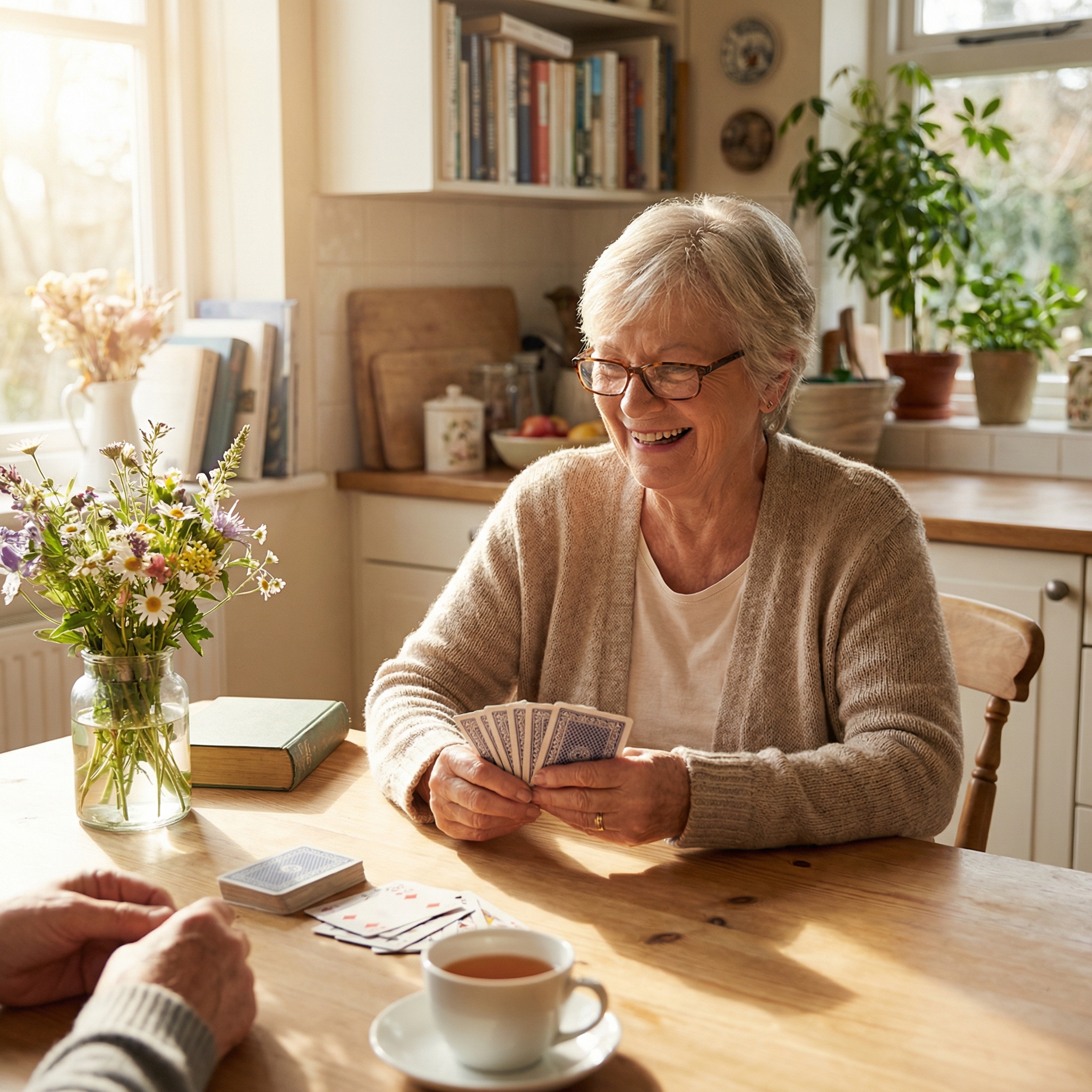
A surprising truth: "Brain health" in later life is not only about doing crossword puzzles. It is also about social time, movement, and everyday routines that quietly build resilience.
A study in PLOS Medicine (Clare L. et al., 2017) examined 2,315 cognitively healthy adults age 65+. Researchers found that people who stayed more mentally and socially engaged, were physically active, and ate a healthier diet tended to score better on cognitive tests. Together, those modifiable lifestyle factors explained about 20% of the differences in cognitive scores. The researchers also found that cognitive reserve (the brain's "backup system") helped explain the link, accounting for 21% of the overall effect.
For adult children balancing work, family, and caregiving, that's a meaningful takeaway: small, repeatable moments count. A daily chat. A short walk. A game. A reason to think and connect.
If you're reading this thinking, "I'm trying," you are. Caring from a distance is still caring.
This is exactly why we built Eleanor, a voice companion that helps seniors stay connected with daily conversations and games.
Source: Clare L, et al. "Potentially modifiable lifestyle factors, cognitive reserve, and cognitive function in later life: A cross-sectional study." PLOS Medicine, 2017.